 It all started in March
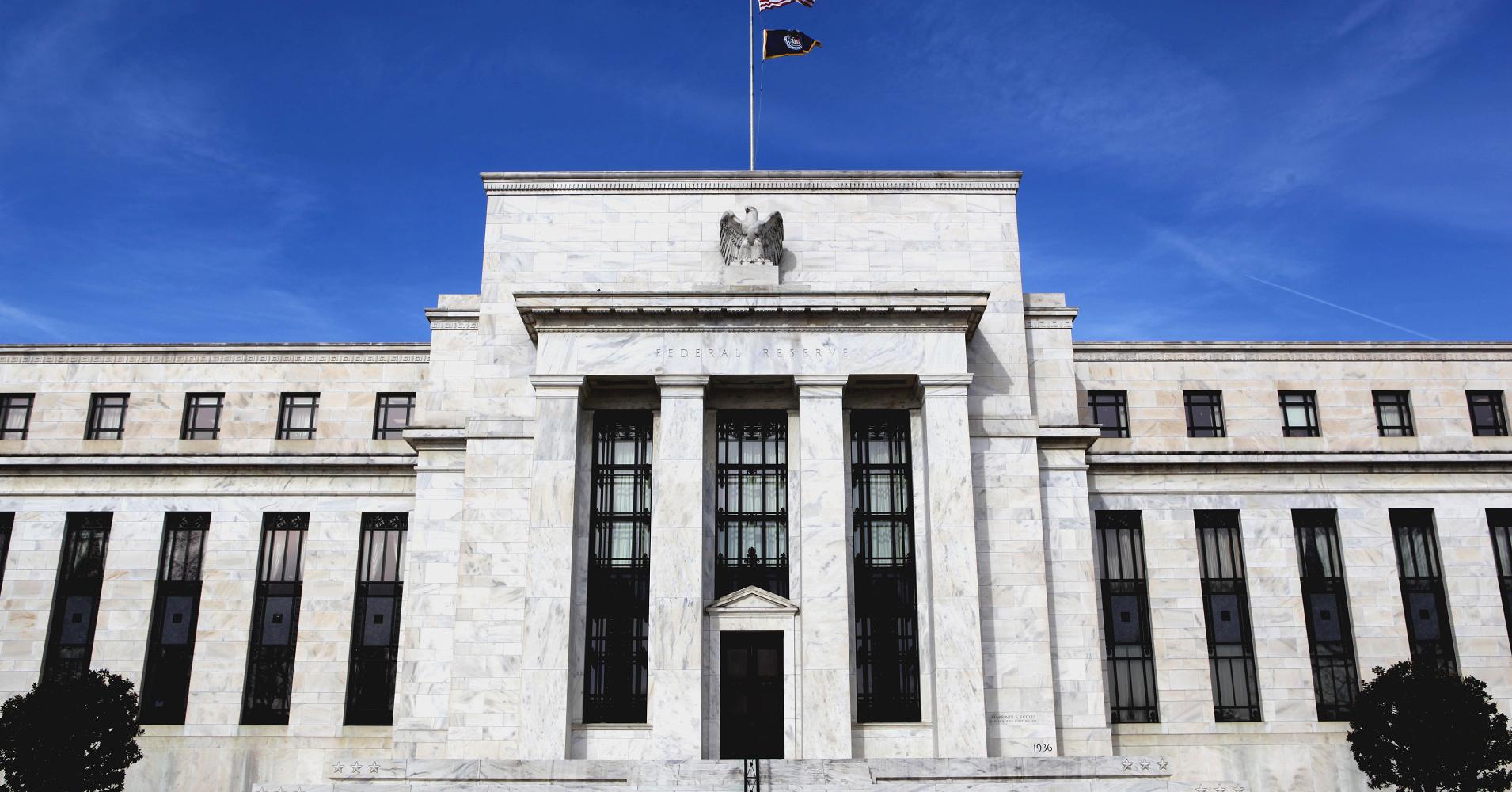
Since the Federal Reserve’s Federal Open Market Committee (FOMC) meeting in March, it has been widely assumed and reported that the Fed is preparing to unwind its balance sheet throughout 2017 and will begin to normalise its monetary policy.
The fact this is being deemed necessary is a result of policies adopted by the Fed in the wake of the 2008 financial crisis, where quantitative easing saw it purchasing financial securities, such as long-term treasury and mortgage-related securities, as a means of stimulating recovery when short-term interest rates could no longer be lowered. It also began encouraging banks to deposit their excess reserves by paying interest rates that were higher than those that could be earned from other short-term investment instruments.
All of this resulted in the Fed’s balance sheet expanding to unprecedented levels, up from less than $900 billion in 2007 to its current level of around $4.5 trillion. Although the Fed stopped acquiring assets on a large scale in October 2014 (choosing instead only to replace maturing securities), the balance sheet has remained largely unaltered and these historically high levels have been maintained.
The minutes of the FOMC March meeting would seem to make it clear that reducing the size of the balance sheet is very much on the agenda, although this normalisation of monetary policy isn’t slated to begin until rises in interest rates can be put in place, with the first of a planned series of hikes expected later this year.

There is no consensus amongst economists, analysts and academics over how unwinding the balance sheet should be accomplished — nor, indeed, whether it should be undertaken at all. What does seem clear, though, is that any attempt to do so presents significant challenges and problems, with real potential for shocks, and that no-one can predict with any certainty as to what the short- and long-term outcomes will be, as shrinking the balance sheet in this way is not something that the Fed has ever previously attempted.
Some take the position, articulated by economist David Andolfatto, that a sizeable balance sheet should in fact be retained because it ultimately generates profits for the Fed and so returns money to the Treasury, somewhere in the region of $80 billon annually. Striking a slightly different note are those, like former Fed Chairman Ben Bernanke, who argue that while it might ultimately be to the Fed’s long-term benefit, there is no pressing need to take any action on the size of the balance sheet until short-term interest rates are significantly higher. Bernanke’s view is that the shrinkage needs to be “passive and predictable” and that interest rates need to be markedly higher so that the Fed has room to mitigate any unexpected side-effects.
Even amongst those analysts and observers who unequivocally believe that the process of balance sheet normalisation is necessary and should begin sooner rather than later, there is little agreement as to how, and the speed at which this should be accomplished —
although most do nevertheless share the view that this process will be disruptive.
The Fed’s favoured approach would appear to be a passive unwinding of the balance sheet, in which maturing securities would not be renewed and as escort istanbul a result its overall size would diminish over time without any overt intervention on the Fed’s part. However, this would not necessarily be a smooth process, as the value of securities maturing in a given year can vary quite significantly, and so this would therefore seem to suggest that a more directly managed approach is called for.
Further, the Fed has stated that it wants to see rises in short-term interest rates before normalisation begins, but this could lead to these rising quicker than long-term rates, resulting in a flattening of the yield curve and a tightening of lending. Instead, financial institutions argue that interest rate hikes and shrinking the balance sheet need to take place together, so Madult.net that rises in both short- and long-term interest rates are more in sync, which would enable lending to remain accessible and profitable throughout the process.
Because interest rates are so closely tied to this issue, what also needs further consideration is the potential effects on the value of the USD occasioned by unwinding the balance sheet, and by extension commodity prices, in particular the price of gold.
As this process will, according to the Fed, necessarily be preceded by interest rate hikes, reducing the size of the balance sheet will likely be accompanied by a strengthening of the USD, as investment in the dollar becomes more attractive against the currencies of other countries. Given that the value of the USD has already risen quite steeply since the November 2016 election, further rises could impact on competitiveness, which would also have a negative effect on commodity prices, most crucially that of gold.
Like other commodities, there is a strong negative correlation between the value of the USD and the price of gold. A dollar that is strong against other currencies leads to lower commodity prices, and vice versa, because of the USD’s role as a benchmark pricing mechanism. This inverse relationship, while not an exact correlation, has been demonstrated over a long enough period of time for it to be a reliable indicator as to where commodity prices are likely to move.
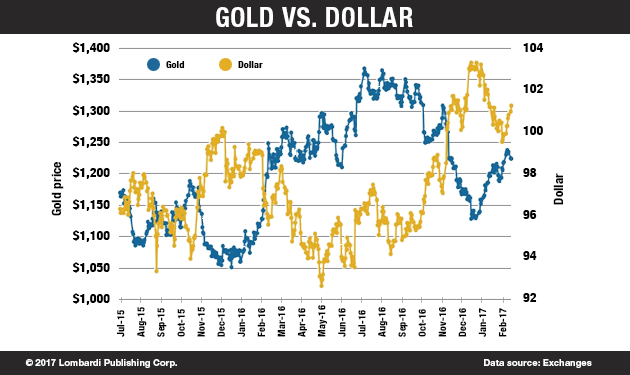
To summarise, what can reasonably be expected from the Fed’s unwinding of the balance sheet is a rise in the USD, as higher interest rates prompt investors to pull out of other currencies and move into the dollar. As a consequence of this forecast strengthening, we can then expect to see a commensurate fall in commodity prices, amongst these gold. With this prospect looming into view, what action should currency traders and others take in relation to gold?
Gold trades can be used as a hedge against currency risks because of the significant inverse correlation noted above, allied to the fact that periods of financial and political uncertainty are very often accompanied by an increased demand for gold. Similarly, gold is a global commodity and is therefore also reflective of global sentiment.
As has been discussed above, there is no certainty as to how the Fed’s unwinding of the balance sheet will proceed, nor about its outcomes either in the immediate or longer term future.
What can, however, be reasonably anticipated is a rising dollar and falling commodity prices.
In this context, therefore, gold should essentially be considered as another currency (as, of course, it de jure is), and so trading gold can be an effective component of a risk-on, risk-off hedging strategy against predicted rises in the USD.
In a period of uncertainty, such as we seem set to enter, it’s important to remember that gold is affected by interest rates and global sentiment, and therefore should be traded in the same way that any other currency is traded. Just as trading in EUR or GBP is used as a hedge against a rising or falling USD, gold trading can be looked upon in the same way.
As we move towards the unknown, trading in gold as part of a hedging strategy against an increase in the value of the dollar is a course of action that currency traders and others should carefully consider.
Warning! This E-Book improve your trading dramatically
9 Powerful Forex Trading Strategies
42 pages E-Book teaching you the most successful Trading Strategies
Strategies include Momentum and Role Reversal, Heikin-Ashi, RSI and Moving Average Crossover, Candlesticks and more. This E-Book contains step-by-step instructions, examples to teach you how to trade profitably.

